
News & Events
Everything happening along the European Goethe Ways in one place — announcements from the association and the full calendar of assemblies, guided hikes, lectures and cultural events across the member network.
News & Announcements
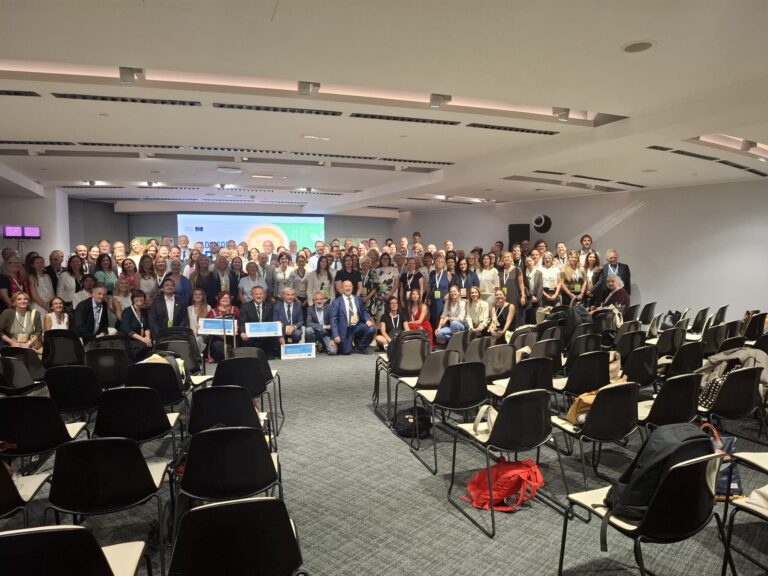
15th Annual Advisory Forum on the Cultural Routes in Yerevan, Armenia
15th Annual Advisory Forum on the Cultural Routes in Yerevan, Armenia
It was co-organised by the Enlarged Partial Agreement on Cultural Routes of the Council of Europe (EPA) and the Ministry of Education, Science, Culture and Sport of the Republic of Armenia, in partnership with the European Institute of Cultural Routes, the Tourism Committee of the Republic of Armenia, and the Foundation for the Development of Culture, with the support of the Municipality of Yerevan.
During the Forum, several important meetings of stakeholders of the Cultural Routes programme were held, including an informal meeting of members of the Governing Board of the Enlarged Partial Agreement; a meeting of the 52 certified Cultural Routes of the Council of Europe, a meeting of the University Network for Cultural Routes Studies and of independent experts.
The programme featured a series of general sessions and interactive breakout sessions where participants were invited to share their own experience. There was also a certification ceremony for the Cultural Routes of the Council of Europe that have received certification in 2026 and awards recognising inspiring practices of Cultural Routes of the Council of Europe.
As part of this event, the official candidate routes for the 2026–2027 Evaluation Circle—which includes the European Goethe Ways—were also presented. Françoise Tondre, vice president of the association, and Daniela Stefanie Hauf, managing director of the route, attended the event on behalf of the European Goethe Ways and presented the route.
News items are published by the association and appear here in full.
All Events
NEWTON | GOETHE | GALILEO Reflections by Mischa Kuball
The exhibition opens with the installation Newton/Goethe (luce nera), created specifically for this occasion. Here, the historical debate on refraction and color theory can be experienced in a way that fills the entire space. Goethe’s intensive study of light and color found expression in his treatise “Theory of Colors”, published in 1810. In it, he explicitly rejected Newton’s physical model, according to which color arises from the decomposition of white light into spectral colors. While Newton understood color as an objective property of light, Goethe placed human perception at the center: for him, colors arise in the transition between light and darkness and are inseparably linked to the observing subject. His approach was holistic, and he understood color as a phenomenon of experience. Although his theory remained controversial from a scientific perspective, it had a lasting impact on art, the theory of perception, and aesthetics, and continues to shape the thinking of numerous artists to this day.
Permanent exhibition about Goethe and Switzerland
The Sasso SanGottardo museum features the first and only permanent exhibition in Switzerland dedicated to Johann Wolfgang von Goethe and his three historic journeys through the Gotthard Pass.
Exhibition “On the first day of my stay…”
The Greater Region in travel writing from the early Enlightenment to the Vormärz.
Until the first decades of the 19th century, accounts and depictions of travel experiences and observations were a literary form as popular as it was widespread. Poised between scientific and literary, subjective and socially critical aims, the genre embraces a wide range of forms (such as the report, the diary, the letter, the collection of letters or the autobiography).
Travel accounts also differ widely in how they perceive the familiar and the foreign, in their claims to authenticity, in the author’s style and powers of observation, and in how far what they depict is fictionalised. In the end, only the journey itself — a phenomenon outside the text — allows them to be defined formally as a literary genre.
Events are listed chronologically; past events remain in the archive for reference.