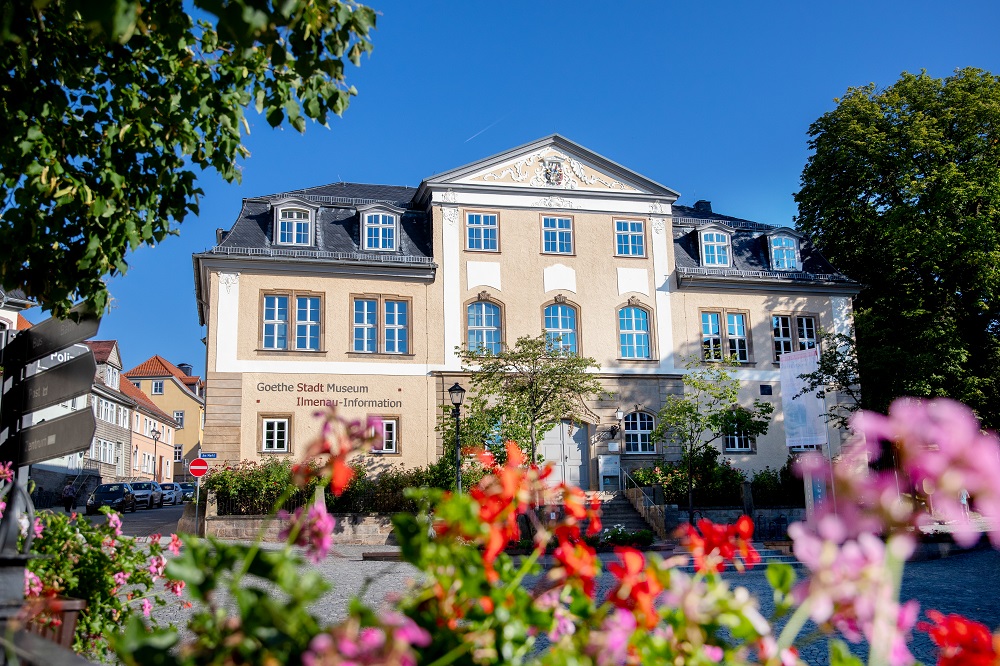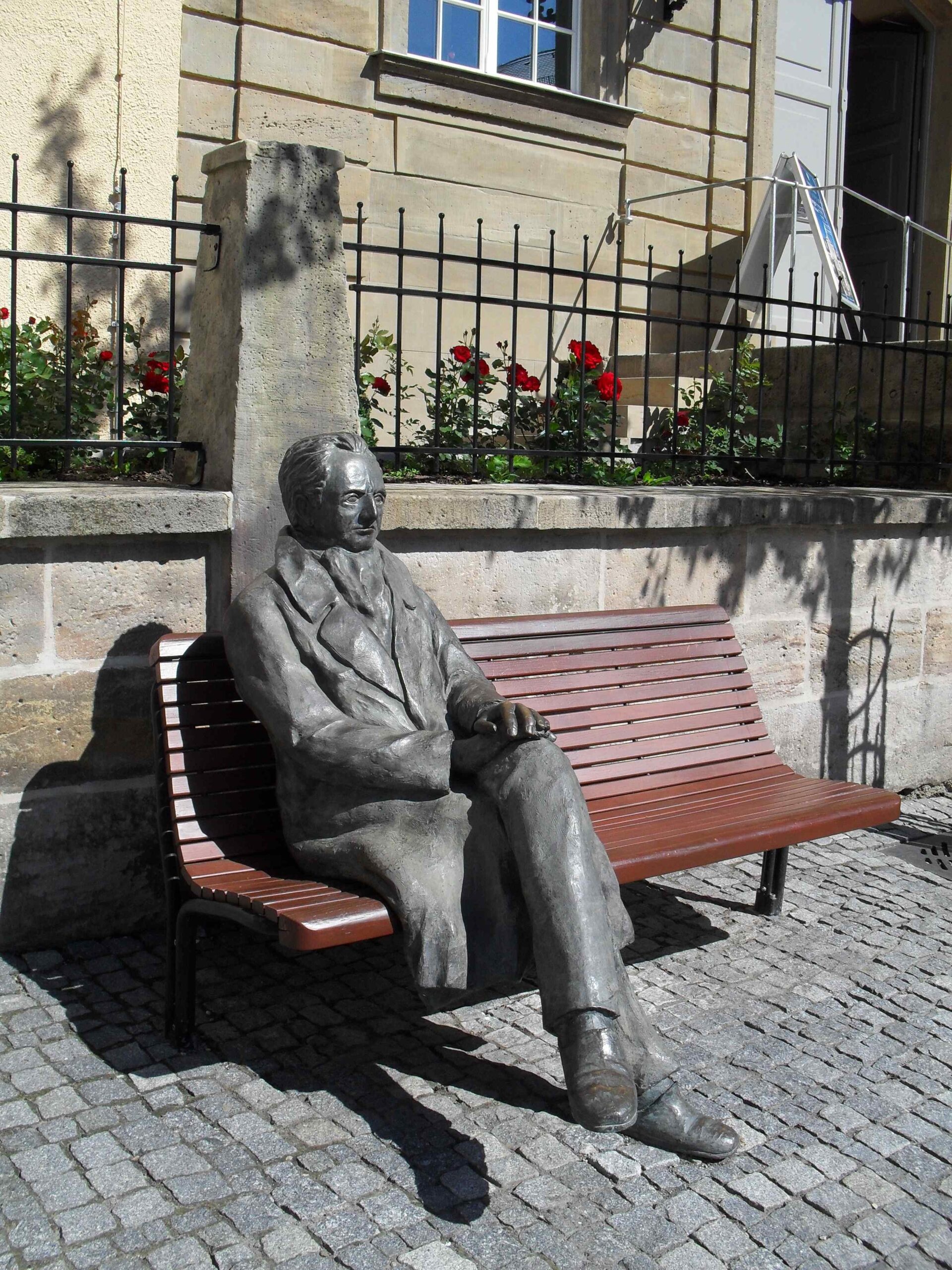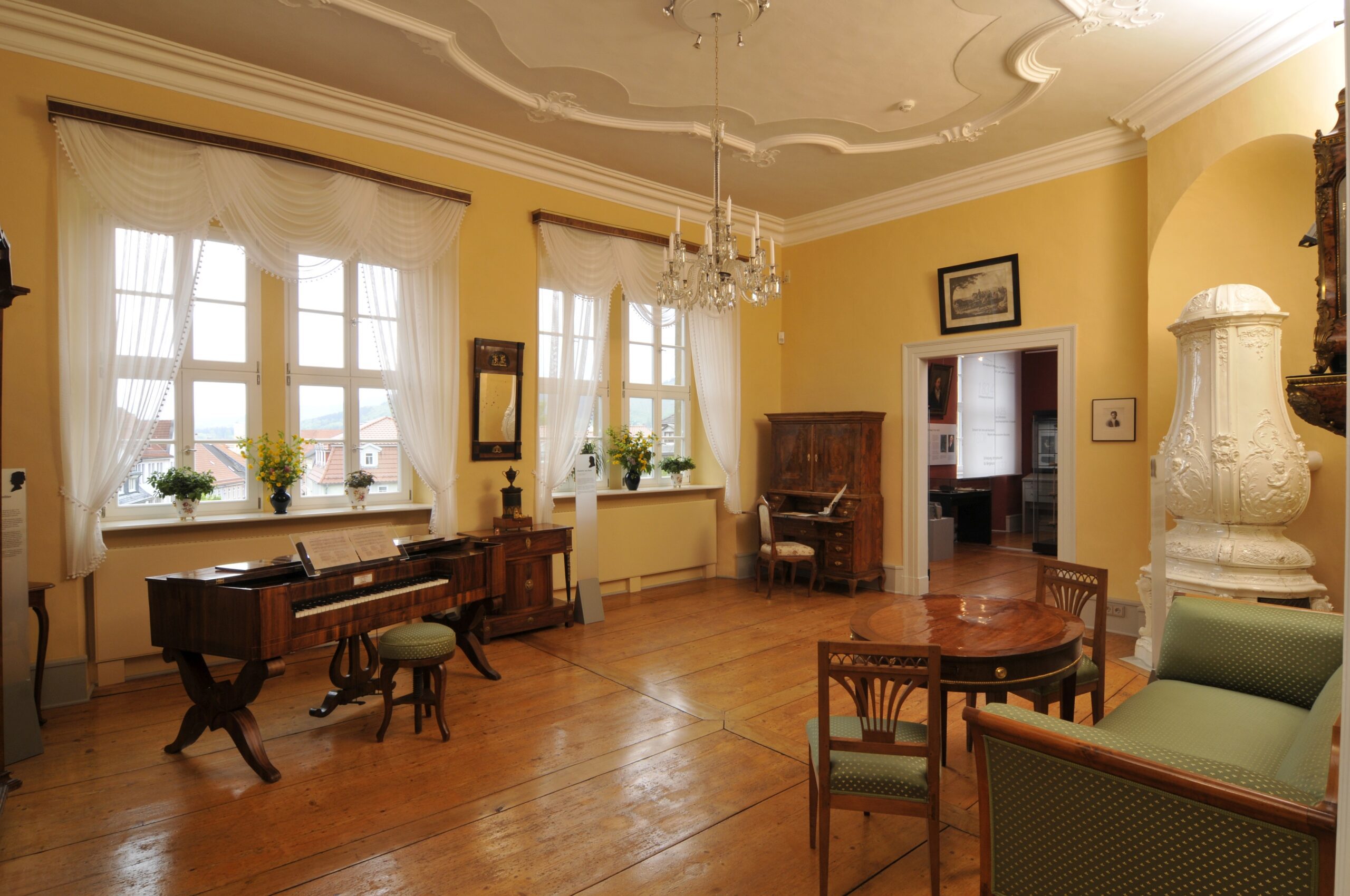
Goethe’s city of Ilmenau
‘I have always enjoyed being here and still do,’ he wrote to Schiller about Ilmenau on 29 August 1795: ’I believe it is due to the harmony of everything here: the area, the people, the climate, the things to do and the things to leave.’
Ilmenau was both a place of work and a place of longing for Goethe, a place of rest and poetic creation. Just a few months after Goethe’s arrival at the Weimar court, the duke sent him to the town at the foot of the Kickelhahn mountain to see to the revitalisation of the mining industry. He returned to Ilmenau 25 more times and was inspired by the beauty of the small town and the Thuringian Forest. He would remain associated with Ilmenau until his death. The poem ‘Ilmenau’, which he gave to the Duke as a birthday present on 3 September 1783, is an expression of the special place of this town in Goethe’s heart and life.
Of his numerous visits, his stay on his 82nd, his last birthday in 1831 stands out. With his two grandchildren, he visited all the places that made such a deep and lasting impression on him. The author Sigrid Damm dedicated an entire book to these days: ‘Goethe’s Last Journey’.
‘Ilmenau cost me a lot of time, effort and money…’, Goethe summed up a few years earlier (1824) and emphasised: ’… but I also learned something in the process and acquired a view of nature that I would not exchange for anything.’
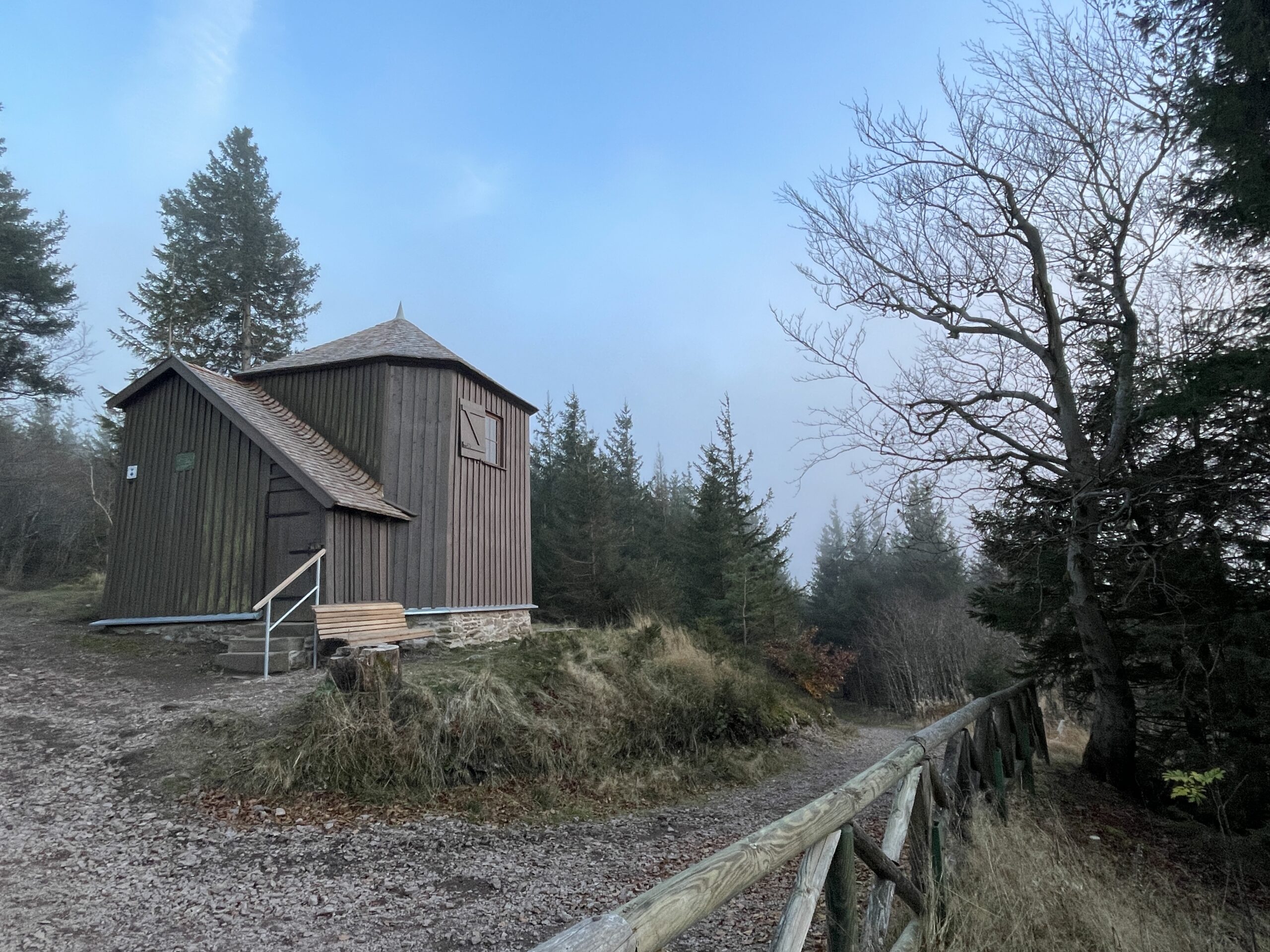
In Ilmenau, you can experience authentic Goethe sites – along the certified Goethe hiking trail in the middle of the picturesque beauty of the UNESCO Thuringian Forest Biosphere Reserve as well as in the three Goethe museums along the quality hiking trail: the Schwalbenstein, where Goethe wrote Act 4 of Iphigenia in a single day; the Hermannstein, whose cave was the scene of passionate encounters; the ‘Dark Hole’, the site of a night-time hunting camp with the Duke; or Goethe’s houses. The Schwalbenstein, where Goethe wrote Act 4 of Iphigenia in a single day; the Hermannstein, whose cave was the scene of passionate encounters; the ‘Finstere Loch’, the site of a night-time hunting camp with the Duke or the Goethehäuschen, the place where the world-famous ‘Wandrers Nachtlied’ was written.
Ilmenau is the striking piece of the puzzle in the ‘Goethe painting’ that completes the picture of him and his time in Thuringia.
https://www.ilmenau.de/de/freizeit/museen-und-ausstellungen/goethestadtmuseum/